Sunday, May 22, 2011

Chapter 8: Dance at Grandpa's


"People had begun to come. They were coming on foot through the snowy woods, with their lanterns, and they were driving up to the door in sleds and in wagons. Sleigh bells were jingling all the time.

The big room filled with tall boots and swishing skirts, and ever so many babies were lying in rows on Grandma's bed. Then Pa took his fiddle out of its box and began to play, and all the couples stood in squares on the floor and began to dance when Pa called the figures."


After a wonderful run of maple syrup sap, Grandpa and Grandma decide to celebrate with a dance at their house. Everyone is so excited; Ma will get to wear the special delaine dress she keeps wrapped in tissue paper. Laura and Mary have never been to a dance, so they are filled with anticipation.

The day arrives and they all pile in the wagon for the trip to Grandma and Grandpa's house. Pa helps Grandpa in the woods all day and Ma helps Grandma, Aunt Docia, and Aunt Ruby prepare for the party. At last it is time and Uncle George goes out on the porch and blows his horn to summon the neighbors.

So many people come the house is filled with laughing, shouting guests. Pa plays his fiddle and the crowd dances the complicated patterns of the square dance until they can't dance anymore. Than it is time for maple syrup on snow, and after that a groaning table loaded with pies, cookies, cakes, bread, cold boiled pork, and sour pickles. By that time the syrup is graining and everyone gets a little dish of maple sugar candy to top it all off.

The music and dancing went on and on and before Laura knew it, it was morning and she was waking up in Grandma's bed. Time to go home and take care of the animals, but what a fun, fun time they had to remember!

Thoughts:

This week was a perfect juxtaposition for me; I needed to host an end-of-the-year party for my preschoolers and I needed to try square dancing. Voila! Square dancing preschoolers were the answer. Of course, since we had it on a Sunday, other family members were invited, so it wasn't just preschoolers. But we all had one thing in common---we had no idea how to square dance.

The square dance originated in 17th century England with various other European influences. However, it developed so strongly in North America that it is thought of almost wholly as an American dance form. There are two main types of square dance, Traditional and Modern Western. Modern Western is a standardized form where you are expected to be at least functionally proficient with the moves before joining a dance. As it turns out, I'm really more a traditional square dancer.

I went to the local library figuring, "I'm in the country now. There will be a whole section of how-to books on square dancing. Probably some videos and sound tracks, too." There were two books. In the basement. The lovely, helpful librarian had to go down there and fish them out for me. One was a serious tome on the subject. It had phrases such as:

"A caller must be a teacher and a leader, and very capable in both roles. No one can call for a teacher and no one can teach for a caller. Leadership is all-important. You are working with something alive and vibrant; a thing of motion, a constantly changing pattern. The Square Dance has lived and breathed for over three hundred years. It lives and breathes, changes and grows, as does any living organism."

Come again?

Needless to say, the other book was much more help. It had simple "games and mixers" which were just about all we could handle. In all honesty, it turned out they were all we could handle, and then some more complicated routines in the back. Each dance had the page music to go with it, though in retrospect, I should have copied the calls so the caller didn't have to squint over the pianist's shoulder, all stuck back in the corner where no one could hear her. And I could have used a copy of the movements to refer to!

"Aunt Docia and Aunt Ruby helped each other with their corsets. Aunt Docia pulled as hard as she could on Aunt Ruby's corset strings, and then Aunt Docia hung on to the foot of the bed while Aunt Ruby pulled on hers.

'Pull, Ruby, pull!' Aunt Docia said, breathless. 'Pull harder.' So Aunt Ruby braced her feet and pulled harder."


There were no corsets to don, but there was a pleasant, panicked flurry to get ready for the party. Just as Aunt Ruby and Aunt Docia styled their hair, all the ladies had to have appropriate pioneer hairstyles. Sadly, some of us had our pioneer locks chopped off a short time ago due to the fever, so we had to content ourselves with our best approximation.

After the usual preschool preliminaries it was time for our square dance tutorial. I chose the "Irish Washerwoman Mixer" due to its simplicity and the fact it was first in the book. It went like this:

All join hands and go to the middle. (All walk 4 steps to the center of the circle)
And with your big foot keep time to the fiddle. (Stamp foot four times)
And when you get back remember my call. (Take four steps back to place)
Swing on the corner and promenade all. (Each leader swings the partner on the left around, places her on his arm, and promenades around the circle for the chorus)

We would have struggled anyway, but it was made especially challenging by the fact that a large percentage of our group was none to clear on terms like "left" and "counterclockwise". In fact, some of them seemed a little confused about "in a circle", as in our practice couples wandered off in all directions, some of the pairs led by high schoolers! Nevertheless, I felt us ready...at least as ready as we were likely to get. Here is a video of our professional-quality performance.....


It didn't go as badly as it could have, and after a few tries, an 'elite' team of eight dancers decided to try the more complicated routine. To the tune of "Turkey in the Straw", we were to perform these movements:

First Pa and Ma go straight uptown, (first couple walk across set to couple #3)
Bring that opposite couple down, bring them down. (first couple walks backward with couple #3 following)
And push them back. (couple #3 walks backward to place with first couple following)
Separate, go round the track, lady go gee, gent go haw (couple #3 steps apart and lets first couple go between them)
Right allemande just Pa and Ma. (when first couple meet back again, they take right hands and turn once)
All swing on the corner like swingin' on a gate. (All swing the lady on the left)
Promenade corners and don't be late. (promenade new partners round the room)

You're supposed to keep this up until everyone has had a turn and you're back with your original partners. If it sounds complicated and hard to follow, that's because it is. Particularly when one must remember whether one is a gentleman or a lady for that particular go-round. Within one try things had devolved into a sort of line dance that very shortly ended in chaos. But everyone enjoyed themselves, so like Laura's somewhat more traditional square dance, it was a resounding success! Here is the video of our second dance. It looks much better on tape than it did in person.

Then it was time for refreshments. We had old-fashioned kettle corn from the microwave, old-fashioned ginger snaps from the bag, chips and salsa for a international flair, old-fashioned apple pie from a box in the freezer, and of course, a piece of maple sugar candy to top it all off. That at least had some faint flavor of authenticity, since it was left over from last week's experiment.

It was fun to try something new, even though it was something I'm absolutely not good at. I have never had grace or flair; my talents lie in a sturdier direction, but no one was worried about how they looked or how they performed. That's the beauty of childhood, and an attitude we lose all to quickly as we age. I enjoyed stepping back into it for a little while. In fact, I was so loosened up that I even had a "Sound of Music" moment in the field out back after the party. You'll have to admit, that's pretty doggone loosened up!

Sunday, May 15, 2011

Chapter 7: Sugar Snow


"In the morning the house was warm from the stove, but when Laura looked out of the window she saw that the ground was covered with soft, thick snow. All along the branches of the trees the snow was piled like feathers, and it lay in mounds along the top of the rail fence, and stood up in great, white balls on top of the gate-posts.

Pa came in, shaking the soft snow from his shoulders and stamping it from his boots. "It's a sugar snow," he said.

Laura put her tongue quickly to a little bit of the white snow that lay in a fold of his sleeve. It was nothing but wet on her tongue, like any snow. She was glad that nobody had seen her taste it."


Signs of spring are everywhere in the Big Woods. The sun is shining and the snow has all melted from the yard, leaving a sea of mud. Tomorrow Laura gets to go out and play, but that night a storm blows through and covers everything back up with snow. Pa calls it a "sugar snow", but Laura doesn't know what that means. Pa can't explain at the moment because he is hurrying off to Grandpa's house.

That evening Pa returns with a package and a big wooden bucket. The bucket is full to the brim with maple syrup and the package holds two big cakes of maple sugar, plus two little cakes for Laura and Mary from Pa's pocket. Grandpa has been making maple syrup.

Laura learns that snow this time of year is called a sugar snow because it keeps the trees from leafing out as soon and that means the maple sap will run longer. And THAT means more sap in the buckets and more syrup for the table. Yum!

Thoughts:
Maple syrup making is a long-standing family tradition of mine. Of course, I've never actually made any myself, but I am VERY professional at dispatching the results of our Wisconsin relatives' labors. So I expected to be a natural at this chapter.

The snow has actually melted at last, so there would be no snow candy (something I've always wanted to do. That is where you take boiling molasses or maple syrup and drizzle it on the snow to make fine strands of hard candy. Pretty easy, but since there was no snow, I decided to try my hand at maple sugar.

There are no maple trees out here, and the time for tapping them is long since past anyway, so I had to use store-bought maple syrup for my base. If you ask me, that is a lot easier anyway, but considerably more expensive, so I diluted it half and half with plain white sugar syrup.

It was still early in the morning before the prairie wind could really get going, but there was still enough of a breeze to interfere with the fire so I set up on the lee side of the house. There is quite a trick to laying a good fire, and as you can see from the picture, I am an expert.


Once the fire was going, I prepared the sugar mix (should have done that before) while Laura watched the fire. When I came back out, she'd set up a whole hobo camp there and was looking quite disreputable. Her improvements did make things more convenient, though.


Once the fire was going, I set the pot on the bricks and began to stir. And stir and stir and stir and stir. It was rather smokey work, and certain unflattering comparisons were raised that rhyme with "itches", but I chose to rise above those mundane and petty distractions to concentrate on my higher task, that of wondering how long it would take this stuff to boil. Besides, Laura had to take her turn, too, and as you can see, the comparisons were just as applicable.


(You can understand why I never had a career in radio...Stupid mouse voice.)

"The instant the sap is graining, Grandpa jumps to the fire and rakes it all out from beneath the kettle. Then as fast as he can, he ladles the thick syrup into the milk pans that are ready. In the pans the syrup turns to cakes of hard, brown maple sugar."

Once it started to boil I began to worry that it would get too hot. I had never made anything like this before, and I deliberately chose not to look up instructions online---I wanted to do it just from the book this time. Let me tell you, the Little House books are not intended to be recipe books! I knew that crystals should start to form, but when? And what did they look like?


The syrup was bubbling away, constantly being stirred, and I knew enough about candy making to know sugar does certain things at certain temperatures, and you NEVER want to go past the right stage for your candy. But what was the right stage? I never did see any crystals, but when I took some syrup out, it showed signs of hardening as it cooled so I decided it was time.


Laura watched as I poured the thick, bubbling syrup into the muffin cups. I was pretty sure it was going to be hard, but would it have any crystallization like real maple sugar? I had two big variables---did I boil it long enough or too long, and did adding the white sugar syrup change its reaction? After peeking into the fridge every few minutes, the candy was cooled enough and ready to come out.

"Each bit off one little crinkle, and it was sweet. It crumbled in their mouths. It was better even than their Christmas candy."

Wonder of wonders, it actually turned out. Now I can't swear this is the maple sugariest of maple sugars, but it does have crystallization and is curiously addicting. I would definitely say this one was a success. Even though Laura and I smell like we were smoked in Pa's hickory stump now!

Sunday, May 8, 2011

Chapter 6: Two Big Bears


"The nearest town was far away. Laura and Mary had never seen a town. They had never seen a store. They had never seen even two houses standing together. But they knew that in a town there were many houses, and a store full of candy and calico and other wonderful things--powder, and shot, and salt, and store sugar.

They knew that Pa would trade his furs to the storekeeper for beautiful things from town, and all day they were expecting the presents he would bring them. When the sun sank low above the treetops and no more drops fell from the tips of the icicles they began to watch eagerly for Pa."


The winter is almost over and Pa bundles his fur catch together for the long hike into town. He is carrying so much weight that he has to leave his gun behind. But he plans to walk fast, do his trading quickly, and get back before dark.

But something goes wrong and Pa doesn't return. Time for chores and Pa is still not back. Ma and Laura go out to milk the cow and find her in the barnyard instead of the barn. Ma gives Sukey a slap, only to realize the next moment that it is actually a bear in the barnyard, not Sukey. The bear is just as startled as they are, and they're able to get back to the house in safety.

The next morning Pa is home and is able to tell of his adventures. He was delayed by the wet, heavy snow and got to town late so there were many men in line ahead of him. By the time he finished his trading it was almost sundown, and the last light faded after he'd gone only a mile.

Pa walked by the light of the stars until he reached an open place and saw a big bear in the middle of the road, standing up on its hind legs. Pa tried to scare it, but the bear refused to budge and Pa finally had to attack it with a sturdy tree branch. It was then he discovered the bear was an old, burnt-out tree stub.

How Mary and Laura laugh to hear of Pa's adventures the night before, and how happy Ma and the girls are to have Pa back safely. They love the new fabric Pa has brought for each one to have a beautiful new dress.

Thoughts:
Bears are in somewhat short supply in North Dakota these days, and even if they were still here, they'd be Grizzly bears and not friendlier black bears. So bear slapping was definitely out as a possibility, even though I love that in this chapter it is Ma who has the adventure while Pa is out beating shrubbery with a club.

I was interested in the fact that Mary and Laura had never been to town--that they could remember--and the town was only 7 miles away. Granted, this was 7 miles in the thick, dark woods, not on the prairie where you can see til next Tuesday, but still... And that probably meant it had been a long, LONG time since Ma had been to town either. So in sympathy with their lack of transportation, I decided to walk from my house to town.

"Pa said that by starting before sun-up and walking very fast all day he could get home before dark."

The nearest town is only 10 miles away; I can see the town's grain elevator from my house. I've walked longer distances than that before and I wouldn't even have to wade through melting snow to get there. I planned to walk in, rest for a while, and then walk back. Since I had no furs to pack, I brought furry animals, which is almost the same thing. Laura and I left about 6:15 in the morning, not quite still dark, but the sun wasn't up yet and the whole prairie was covered with a soft mist.


I had to return to the house several times to grab items I forgot, including my cell phone---somehow I doubt Pa had that problem. Finally, it was off to Westby, Laura and I walking and the dogs running in circles around us. The sun rose shortly after we left and bathed the prairie in a beautiful light. It was a gorgeous morning and I felt lucky to be out in it. Laura felt whiny.

After about two miles, someone who shall remain anonymous became acutely interested in the physical processes of friction and what happens when you start out on a 10 mile walk in borrowed hiking boots that go past your ankle with paper-thin socks that don't go past your ankle. Mother-love was seriously strained, but I traded socks with this someone because I was wearing lower shoes.

We had walked for a very long way before I remembered one other item I forgot to bring. A roll of Sears Roebuck Catalog. And it would have been nice to have right about then. But we were passing an old, collapsed farm building, so while Laura sat on the rock pile and tried to pretend she didn't exist, I--ahem--admired the scenery on the other side of the building.

When I was finished, I walked along the building to the front where Laura was. I like to poke around in old things, so I was bending down to get a better look at the inside when something, I have no idea what, alerted my senses to a life form in the grass and debris about 8 feet away. It was black. And white. In the same instance this peculiar fact penetrated my brain, I also became aware of a particularly familiar musky smell. From here the two eye-witness accounts vary slightly, but Laura is a flighty person given to exaggeration, so I feel comfortable that my account is the one with greater accuracy.

Calmly, with a voice soft and low as gentle breeze, I told Laura, "Laura, do not be alarmed. There is a skunk. Let us move quickly and quietly to the road." At the same time, I backed in a non-threatening and orderly fashion far enough away from the skunk that I could turn and saunter up to the road.

Laura says, "Mom, I was about to tell you to look at the cat. I didn't even know it was a skunk until I heard you yelling and saw you running away. THEN I ran." A likely story, but since I had to creep down there and retrieve the glove I left in my hasty exit, I think there might be some truth to her version of events.

I'm sure God was blessing us because even though the dogs were running freely through the area and all around the building, they never saw the skunk. If they had, ALL of us would have been very sad, especially those of us engaged in activities that would have prevented hasty retreats.

Laura thought it would have been hilarious if the skunk had sprayed me, but I was at one corner of the house, she was on the large rock in the middle, and the skunk was at the other corner. The maximum effective range for skunk spray is 20 feet, so as you can see from the picture, Laura wouldn't have found it quite so funny if it had actually happened.

Not too long after this, one of my dogs, Anika, ran out of energy. Finley was still determinedly leaping through the fields, but Anika has a health problem and she was finished. I sent out an emergency call on my pioneer cell phone, and not long after my dad showed up to pick her up. Only he brought his Beautiful Border Collie Baby Jackie, so we still had two dogs. SHE had all her energy and we were almost to the main road, so I let her off her leash to get the wiggles out. And how! Afterward she came, collapsed in a small snow pile, and took a snow bath to cool off.

Westby came into full view at last and only 3 miles to go. These were by far the longest miles of the trip. One sad trick of the prairie is to make things look much closer than they are, so even though we could see the finish line so clearly, it still took forever to get there. But all good things must come to an end, and at last we reached our destination.

However, my suffering was not yet over because now I had to endure comments like, "I bet Pa didn't collapse on the couch when he got to town." And the plan to walk back home was cast off without regret. I'm sure Pa would have done the same thing if he had a Bad Knee from an Old Injury.

So in the end, Pa, Ma, and I each had our own wild animal encounters. I guess I'd rather meet a skunk than a bear, but what a choice! I'm feeling much more grateful for modern methods of transportation that allow us to make a trip, without a second's thought, that once was the event of the whole year. I think my Laura is a little more grateful now, too!

Journey's End---Almost!

Wednesday, May 4, 2011

Chapter 5: Sundays


"Now the winter seemed long. Laura and Mary began to be tired of staying always in the house. Especially on Sundays, the time went so slowly.

Every Sunday Mary and Laura were dressed from the skin out in their best clothes, with fresh ribbons in their hair. They were clean, because the had their baths on Saturday night.

On Sundays Mary and Laura must not run or shout or be noisy in their play. Mary could not sew on her nine-patch quilt, and Laura could not knit on the tiny mittens she was making for Baby Carrie. They might look quietly at their paper dolls, but they must not make anything new for them. They were not allowed to sew on doll clothes, not even with pins."


Sunday is a hard day for Laura to sit still through, especially in the winter. One day, late in the afternoon, she begins running and shouting with Jack. Pa tells her to sit down in a chair, and instead of doing it nicely, Laura cries and kicks the chair with her heels. Pa gathers her in his arms and tells her the story of "Grandpa's Sled and the Pig."

After the story, Laura and Mary lay in bed and listen to Pa play on his fiddle until they fall asleep. In the morning, it is Laura's birthday. She gets her birthday spankings from Pa and 5 little cakes from Ma, one for each year. Mary gives her a new dress she made for Charlotte while Laura thought she was working on her quilt.

Thoughts...
I can readily identify both with Laura's frustration on the restraints of Sundays, and her parents' struggles to keep two lively young ladies content and well-behaved until the close of the Sabbath. It is a challenge to make the Sabbath a special day for children, not one just centered on a long list of don'ts. It's not as hard once you reach adulthood and all you want at the end of a long week is to sleep or catch up on some inspirational reading.

I wouldn't want to return to the rigid days described in Pa's story about his father and the pig (very funny!), but I do feel that we've lost some of the specialness about the Sabbath. It's the day God writes us in His daily planner for a whole 24 hours, and that makes it too special to waste on everyday things.

"In the wintertime Pa filled and heaped the washtub with clean snow, and on the cookstove it melted to water, Then close by the warm stove, behind a screen made of a blanket over two chairs, Ma bathed Laura , and then she bathed Mary"

Of course it wouldn't do to be dirty on Sunday, so the whole family took a bath on Saturday night. The lucky one got to go first, but each family had a different hierarchy to decide who that lucky one was. Some washed from the littlest to the biggest. Some from the biggest to the littlest. Some chose to wash from cleanest to dirtiest, and some put the ones that squawked the loudest about it in first place. I would have been firmly in the "Mom always goes first camp."

This particular activity was an easy one for me to do because I have been doing it now and again all winter for various reasons. Sometimes it was because my pump wasn't working and I had to haul water by hand. Lately it's been because the drain pipe of the bathtub wasn't installed correctly and at the moment isn't even hooked up. Whatever the reason, I am an old pro at modern pioneer bathing. Of course, this isn't my only solution to the issue of cleanliness. Most often, I find myself inexplicably in Westby around bath time. Funny thing, that.

I know Pa started the process by filling a large kettle with snow to melt on the stove, but since I have a perfectly nice well, I decided hauling the water in a bucket was enough authenticity for now. My well is just outside the pump house, but the pipe comes through the floor, so I am able to pump my water in comfort. I use "I" loosely, because it is really the electric pump that does the work, but I have to plug it in, so you see I must suffer some.


Then it is inside to heat the water on the stove. While it heats, I can work on warming up the bathroom if the weather is chilly. When the water is nice and hot, I pour it in the "tub", a large storage container I bought to hold my winter gear. After that, I add enough cold water so I don't cook like a lobster. Washing is accomplished by pouring water from a large cup.

After the refreshing bath is completed, the tub is hauled outside and dumped. In pioneer days, if water were in short supply, after everyone in the family had bathed, I would wash the clothes in it, then use it to scrub the floors, then pour it on my garden. I'm glad I don't have to do that, because the water would be solid dirt by the time it got to my plants.

Monday, May 2, 2011

Chapter 4: Christmas


"Christmas was coming.

The little log house was almost buried in snow. Great drifts were banked against the walls and windows, and in the morning when Pa opened the door, there was a wall of snow as high as Laura's head. Pa took the shovel and shoveled it away, and then he shoveled a path to the barn, where the horses and the cows were snug and warm in their stalls.

Ma was busy all day long, cooking good things for Christmas. She baked salt-rising bread and rye'n'Injun bread, and Swedish crackers, and a huge pan of baked beans, with salt pork and molasses. She baked vinegar pies and dried-apple pies, and filled a big jar with cookies, and she let Laura and Mary lick the cake spoon."


It's almost Christmas and the little log cabin is full of activity. Uncle Peter, Aunt Eliza, and the cousins are coming to spend the whole of Christmas day, and when they arrive, what fun everyone has. The children play in the snow and the adults get to enjoy each others' company. Everyone finds it hard to sleep Christmas Eve, wondering what Santa would bring them the next morning.

The next morning the children are delighted to find their stockings full of wonderful things. Each child gets a pair of bright red mittens and a stick of peppermint candy. What riches, but Laura gets the best stocking of all, because in it, besides the mittens and candy, is a beautiful rag doll. Laura names her Charlotte.

After Christmas dinner, it's time for the cousins to begin the long trip back to their house. They wrap up in as many layers as they can because they have to ride in an open sled. Ma slips piping hot baked potatoes into their pockets and Aunt Eliza's flatirons go under their feet. On go the blankets, quilts, and buffalo robes, then it's good-bye.

Laura was the happiest of all. Laura had a rag doll. She was a beautiful doll. She had a face of white cloth with black button eyes. A black pencil had made her eyebrows, and her cheeks and her mouth were red with the ink made from pokeberries. Her hair was black yarn that had been knit and raveled, so that it was curly.

Christmas was a lot simpler back in pioneer days. A lot simpler. But I don't think we've gained all that much since then, with our piles of toys (and piles of credit card bills). Imagine how happy you could be if a new pair of homemade mittens was enough to make you that excited! Nobody was complaining, and nobody was tired of their toys the next day and waiting for more. A stick of candy and bright red mittens was just about as wonderful as you could get.

I decided to make a rag doll, a charming Charlotte of my own. The only way the experience could have been worse would have been if I'd had to do it by hand! Making the body of the doll went fairly smoothly; just cut out a gingerbread man shape on steroids, then sew and stuff. I drew the eyebrows, sewed on the buttons, and painted the mouth and cheeks. Frozen strawberry juice (in the absence of pokeberries) did NOT work, so I used acrylic paints. I should have done the face before I sewed the body, but that would have been the easy way, and evidently I had taken a vow against ease for the duration of this project.

After the body, it was time for the dress. The original Charlotte had a dress of pink and blue calico, but since I didn't have any calico of any shade, in true pioneer fashion, I improvised. I took a skirt from my niece's desperately-grasping fingers and carted it home to be sacrificed for art. And sacrificed again, because the first dress I made didn't fit and went in the trash. This was supposed to be a how-to article, but I can pretty much sum it up in one sentence. Buy. A. Pattern. Seriously.

My second dress went better, but at 11:00 last night, I was blearily working away and wishing I'd picked a different project. At last I had the dress finished except for the detail work, and was ready to start on the hair. I used to have a real loom for sewing doll hair, but got rid of it years ago (I'll never use THIS again)and had to improvise with four chopsticks and some duct tape. I don't know how the west was ever won without duct tape. That's probably why it took so long.

Then I had to stop because all the rest of my supplies were at "Mom's Sewing Emporium" in Westby. After a quick shopping trip this morning, I was able to finish the rest of Charlotte. She was happy when she got her hair sewn on and could quit being bald. Now that I'm finished, I almost think it was worth it. Almost.

Even though I have a Laura of my own, at 15 she's a little old for Charlotte, so I am giving her away to some (hopefully) lucky winner of the "Little House on the Prairie Essay Contest." To enter, post a comment with your best idea for an upcoming activity. I am not making a hard and fast promise until I see what kind of ideas you come up with, but I will think about doing the winning suggestion during "Pioneer Experience Week" later this summer.

You don't have to use an idea straight from a "Little House" book; it's fine if you come up with your own, but do some research and make sure it's true to pioneer experiences in the 1870's. Originality is important, but simplicity might win you points, too! I can't get too complex or I will bog down. And ideas that involve life-threatening activities will not be too popular with the judging panel.

Have lots of fun with your entries and make sure to have them in by May 31st. Soon one of you will have your very own Charlotte to cuddle or share with a special little girl in your life. The rest of you are out of luck, because I don't think I'll be making another doll anytime soon!

Sunday, April 24, 2011

Chapter 3: Long Rifle


"When Pa was at home the gun always lay across those two wooden hooks above the door. Pa had whittled the hooks out of a green stick with his knife, and had driven their straight ends deep into holes in the log. The hooked ends curved upward and held the gun securely.

The gun was always loaded, and always above the door so that Pa could get it quickly and easily, any time he needed a gun."


Every evening, before Pa did anything fun with the girls, he took care of one of the most important tasks on the frontier. He prepared his gun for the next day's use. First he made the bullets by melting lead and pouring it into the bullet-mold. When he had replenished his stock of bullets it was time to clean the gun.

He washed the inside of the gun with boiling water, thoroughly dried it, then while it was still hot, he oiled it. It sounds like it could be a very messy job, but one that was vital to survival. A dirty gun was not a reliable gun. After cleaning, the next step was to load the gun.

Laura and Mary stood on each side of Pa to make sure he didn't make a mistake in the process, but he never did. First a carefully measured amount of powder went in, then a little piece of greasy cloth with a bullet nestled on the top of it. They were both pushed down to bottom of the barrel, then pounded with the ramrod to settle the bullet against the powder. The last step was to carefully place a firing cap underneath the hammer of the rifle--letting the hammer down too hard would fire the gun.

The long rifle played a very important role in American history. The purpose of the ridiculously long barrel was that it increased the accuracy and range of the gun. (something about the longer the powder burns, the greater the muzzle velocity, the greater the accuracy) This advancement in technology allowed the rough frontiersmen to out-shoot the better trained, but surprised, British soldiers.

"Whenever Pa shot at a wild animal, he had to stop and load the gun---measure the powder, put it in and shake it down, put in the patch and the bullet and pound them down, and then put a fresh cap under the hammer---before he could shoot again. When he shot at a bear or a panther, he must kill it with the first shot. A wounded bear or panther could kill a man before he had time to load his gun again."

The down side of this greater accuracy was the increase in the time it took to load. An old-school musket could be re-loaded in 20 seconds--still a little long if a grizzly is charging at you--but the long rifle required a full minute between shots. People on the frontier became good shots because their lives depended on it. If they missed the first time, there was no next time.

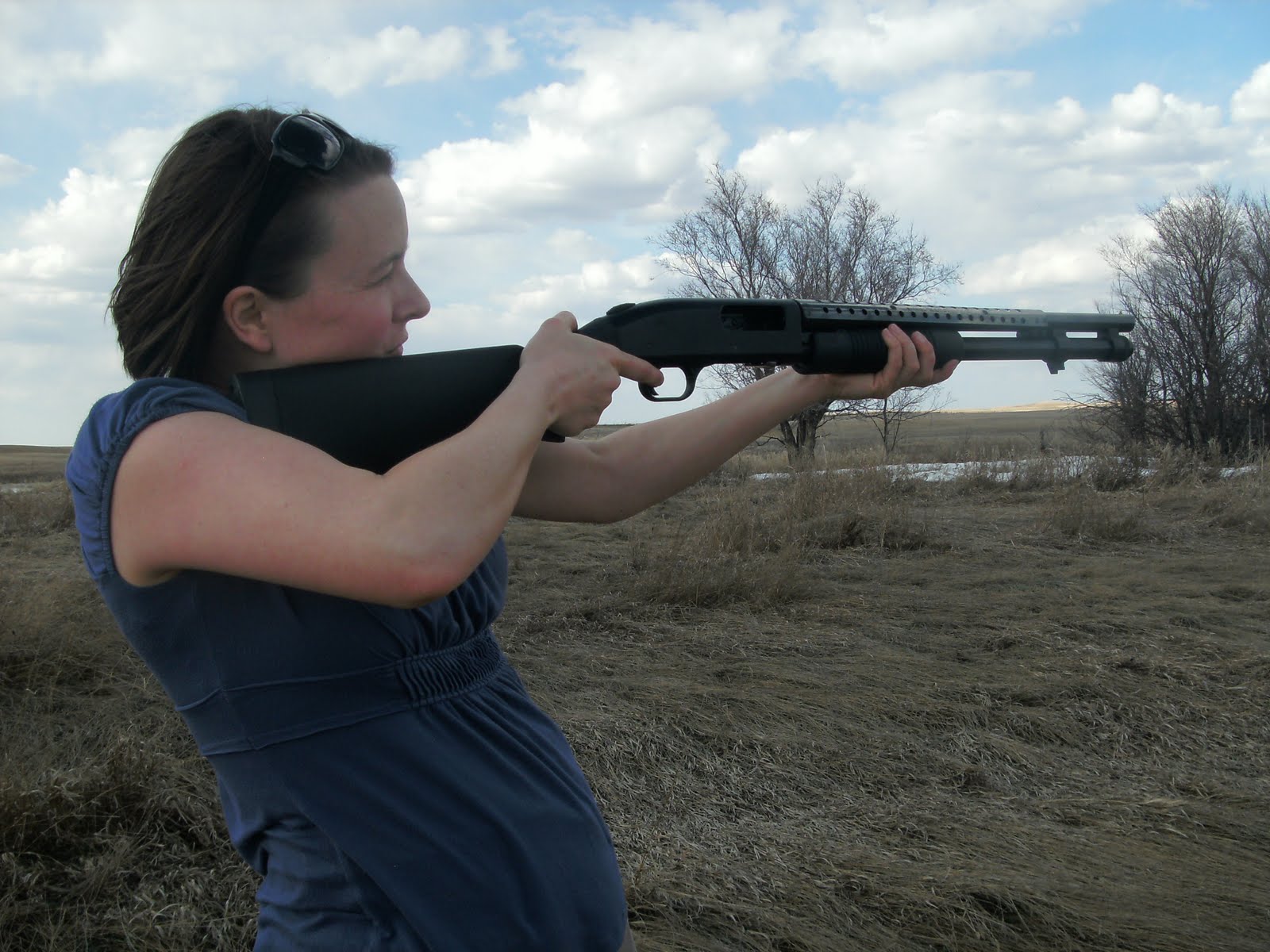
Now that's pressure. Miss and you're lunch! I wondered how long I would last in the Big Woods. In the interest of transparency, I didn't wonder very hard---I'd shot a gun approximately 2 times in my life, the first time in my teens. They let me try twice before my dad took the gun away because I was such a danger. (I'm still bitter.) The second time was with a pistol in a shooting range, and that didn't go too impressively either.


I prepared my target. How close would I have to let a charging panther get before I used my one shot? I painted the galloping mountain lion, not quite full size, but a large juvenile, then measured out 300 feet, the standard range for an average shot with the long rifle.


If you look really close and maybe click on the picture so it shows larger, you can see my panther target. Needless to say, I did not hit the target at 300 feet. At this distance the panther would reach me in less than eight seconds. Certainly not time enough to reload if I missed. I moved to 200 feet. Still not a dent in the paper. My dad felt the need to give me a little more instruction on how to hold the gun, as he felt my natural aptitude fell a smidge short.

"If you were any more awkward, you'd fall over."

He also fired a sample shot, and put a hole right through the panther's spine. Showoff!

I moved to 125 feet. The panther is getting closer---at this range, I have 3 seconds to make my shot count. I would be a bit nervous if I weren't dealing with cardboard. I fire another round with the .22 and Laura runs to check. Nope, nothing. Now it's time for the big caliber gun, the shotgun. My dad says the experience of firing it is the closest any of his guns come to firing a long rifle. It doesn't fire a single bullet, but a round of pellets that has a greater chance of hitting the target. I fire one round, and Laura runs forward again. Nothing. Not a mark. A second round, still nothing.

I move forward yet again, to the 100 foot mark. I wanted to go closer, but my dad said I could hit it with a rock from that distance. Speak for yourself! I was down to the last shotgun round and I braced myself for the painful repeat of the previous 2 shots. Literally painful. Shooting a shotgun is a LOT different from shooting a .22! It kicks, and with no earplugs, you're a little deaf for a moment or two afterward. Just as I was about to shoot, Laura told me to wet the sights, ala Sergeant York (great movie, watch and you'll know what she was talking about). At this point, what did I have to lose?

Even from 100 feet away, I could see some faint holes! Yes, I hit the target, and wonder of wonders, one of the pellets went through the heart of the panther. A kill shot at last. Any shot at last. But I still wanted to see how close I would have to be to really show off my superior marksmanship and get a kill shot to the head.


Switching back to the .22, I moved to 75 feet and fired. I must have been improving, because I hit the target on the first try, with a shot to the heart. Still not satisfied, I moved forward and shot from 50 feet away. Definitely improving, because I hit his head this time--I took out a tooth from his cheek. Now he was very mad and would reach me in just over one second.


Only 25 feet from the target, I was one leap away from kitty chow---the mountain lion can cover that distance in a single bound. This shot had to count and it did, a bullet square in the center of his brain. I would live to pioneer another day. Of course, I'd died about 50 times already, but in virtual pioneer land you get do-overs.


My shoulder is still sore from the recoil of the shotgun, but I feel a sense of accomplishment. I am not as putrid a shot as I was this morning. I'm still glad my life does not depend on my ability to hit a moving target. If it's got to depend on anything, I am hoping for a slow, patient target at least. Maybe a rabid, vicious giant sloth.


Sunday, April 17, 2011

Chapter 2: Winter Days and Winter Nights


"The snow kept coming till it was drifted and banked against the house. In the morning the window panes were covered with frost in beautiful pictures of trees and flowers and fairies.

Laura and Mary were allowed to take Ma's thimble and made pretty patterns of circles in the frost on the glass. But they never spoiled the pictures that Jack Frost made in the night."


Winter is tightening its grip in the vast expanse of the Big Woods. Pa spends his days walking the trap lines, gathering wild creatures while their fur was thickest and most valuable. He never leaves his gun behind because the woods are still a dangerous place and you never know when you'll need to defend yourself. Each evening he comes home with icicles hanging from the ends of his mustache, chilled and ready for the warm, cozy fire.

Ma and the girls do the housework during the day; each day of the week has its own chore to do:

"Wash on Monday,
Iron on Tuesday,
Mend on Wednesday,
Churn on Thursday,
Clean on Friday,
Bake on Saturday,
Rest on Sunday."


After a day of busy work by every one in the family, Ma sews by the light of the kerosene lamp (lucky Ma) while Pa sings, plays games with Laura and Mary, or tells them stories of the old days.

After reading Chapter 2, I had two options for my experiment this week. I could either make butter or be chased through the woods by a panther. I chose to make butter, even though the second option would have been more exciting for my readers, I'm sure. I couldn't even find a cow to milk; dairy farming has gone seriously out of style in this region of the country. I could have tried to milk a wild range cow, but it turns out I do not have enough love to do that for you.

"Laura liked the churning and the baking days best of all the week."

My butter making supplies were somewhat different than Ma would have used, but the core process is still the same. Milk the cow, separate the cream, or go to the store, buy a container of (vastly over-priced) cream, and draw a picture of a cow on it so you don't feel so bad. Then you're going to need to agitate the cream by some method.

In the olden days, a churn was used. And used. And used. A more modern method is to use an electric mixer, just as if you were making whipped cream. In fact, I found out my own grandma, farm cook extraordinaire, occasionally turned her whipped cream to butter by beating it a smidge too long. I tried both methods, but lacking a churn, used a glass jar and a whole lot of energy shaking it.

I poured part of the cream in the jar, covered it with a plastic baggie and a rubber band, and started shaking it. My family provided moral support by putting on music to shake by, telling me I needed to shake faster, and laughing at me. Five minutes into it I was finished---unfortunately, the butter was not. It was another five minutes before I even began to see a change in my fluffy cream. However, having begun to change, it shifted rapidly, and another minute showed why you never want to over-beat your whipped cream.


"At first the splashes of cream showed thick and smooth around the little hole. After a long time, they began to look grainy. Then Ma churned more slowly, and on the dash there began to appear tiny grains of yellow butter."

Within 15 minutes of shaking, with breaks for taking pictures, I was looking down at a beautiful glob of creamy yellow butter swimming in thin buttermilk. I took it out onto a wooden board and began to work the buttermilk out of it.

Then it was time to try the modern appliance way. I tried the blender first, but all that did was whip it up too thick for the blender to work. So I poured it into a bowl and started mixing it with the mixer. It went much faster, and I had butter within 8 minutes. And it was much thicker butter, too, with more of the buttermilk worked out. I mixed the two batches together and added salt.

"Laura and Mary watched, breathless, one on each side of Ma, while the golden little butter-pats, each with a strawberry on the top, dropped onto the plate as Ma put all the butter through the mold. Then Ma gave them each a drink of good, fresh buttermilk."

I didn't have a butter mold, but made do with squishing the butter into a little glass bowl. Then it was time to clean up the rather large mess I'd made. Who would have thought innocent, little butter would be so untidy? My wonderful mom did all the dishes I'd gotten dirty, so a special thanks to my "Ma." Motherhood hasn't changed all that much since pioneer days--moms still get stuck with all the jobs nobody else wants.